

Article Sidebar
Main Article Content
Abstract
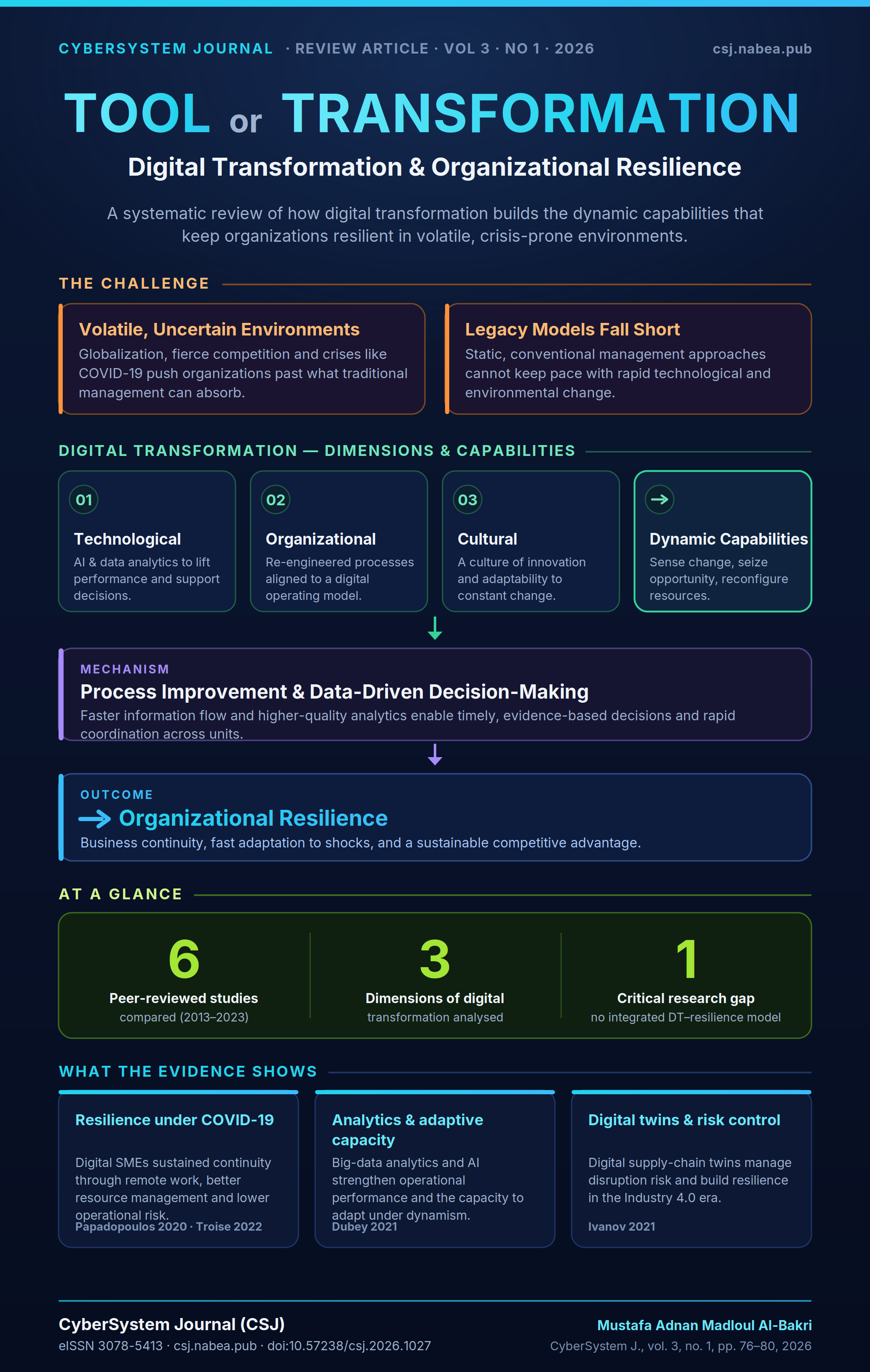
This research aims to provide an in-depth and comprehensive review of the role of digital transformation in enhancing organizational resilience within contemporary dynamic environments characterized by high levels of uncertainty and constant change. The research is based on a critical and systematic analysis of recent literature in the field of IT management and digital transformation, which addresses this concept as a strategic tool for reshaping organizational capabilities and achieving institutional sustainability.The results of the analysis indicate that digital transformation is no longer limited to adopting new technologies, but has become a comprehensive structural and cultural transformation encompassing the redesign of organizational processes, the development of business models, and the enhancement of data-driven decision-making. It also contributes to building dynamic capabilities that enable organizations to adapt to environmental changes and respond quickly to crises, thereby enhancing business continuity and achieving a sustainable competitive advantage.The research also highlights the importance of organizational resilience as a crucial factor in organizational survival, especially in light of global crises such as the COVID-19 pandemic, where digital organizations demonstrated a greater capacity for adaptation through the adoption of remote work, improved resource management, and the reduction of operational risks. However, organizations face numerous challenges, most notably weak digital infrastructure, a shortage of skilled personnel, and resistance to cultural change.The research concludes that there is a research gap characterized by a lack of applied studies and integrated models linking digital transformation and organizational resilience, particularly in developing environments.
Keywords
Article Details
Copyright (c) 2026 Mustafa Adnan Madloul Al-Bakri (Author)

This work is licensed under a Creative Commons Attribution 4.0 International License.
How to Cite


References
- A. Bharadwaj, O. A. El Sawy, P. A. Pavlou, and N. Venkatraman, “Digital business strategy: Toward a next generation of insights,” MIS Quarterly, vol. 37, no. 2, pp. 471–482, Jun. 2013. DOI: https://doi.org/10.25300/MISQ/2013/37:2.3
- R. Dubey, A. Gunasekaran, S. J. Childe, D. J. Bryde, M. Giannakis, C. Foropon, D. Roubaud, and B. T. Hazen, “Big data analytics and artificial intelligence pathway to operational performance under the effects of entrepreneurial orientation and environmental dynamism: A study of manufacturing organisations,” International Journal of Production Economics, vol. 226, p. 107599, Aug. 2020. DOI: https://doi.org/10.1016/j.ijpe.2019.107599
- D. Ivanov and A. Dolgui, “A digital supply chain twin for managing the disruption risks and resilience in the era of Industry 4.0,” Production Planning & Control, vol. 32, no. 9, pp. 775–788, 2021. DOI: https://doi.org/10.1080/09537287.2020.1768450
- S. Kraus, P. Jones, N. Kailer, A. Weinmann, N. Chaparro-Banegas, and N. Roig-Tierno, “Digital transformation: An overview of the current state of the art of research,” SAGE Open, vol. 11, no. 3, pp. 1–15, Sep. 2021. DOI: https://doi.org/10.1177/21582440211047576
- T. Papadopoulos, K. N. Baltas, and M. E. Balta, “The use of digital technologies by small and medium enterprises during COVID-19: Implications for theory and practice,” International Journal of Information Management, vol. 55, p. 102192, Dec. 2020. DOI: https://doi.org/10.1016/j.ijinfomgt.2020.102192
- C. Troise, V. Corvello, A. Ghobadian, and N. O’Regan, “How can SMEs successfully navigate VUCA environment: The role of agility in the digital transformation era,” Technological Forecasting and Social Change, vol. 174, p. 121227, Jan. 2022. DOI: https://doi.org/10.1016/j.techfore.2021.121227
- P. C. Verhoef, T. Broekhuizen, Y. Bart, A. Bhattacharya, J. Q. Dong, N. Fabian, and M. Haenlein, “Digital transformation: A multidisciplinary reflection and research agenda,” Journal of Business Research, vol. 122, pp. 889–901, Jan. 2021. DOI: https://doi.org/10.1016/j.jbusres.2019.09.022
- G. Vial, “Understanding digital transformation: A review and a research agenda,” Journal of Strategic Information Systems, vol. 28, no. 2, pp. 118–144, Jun. 2019. DOI: https://doi.org/10.1016/j.jsis.2019.01.003
- K. S. R. Warner and M. Wäger, “Building dynamic capabilities for digital transformation: An ongoing process of strategic renewal,” Long Range Planning, vol. 52, no. 3, pp. 326–349, Jun. 2019. DOI: https://doi.org/10.1016/j.lrp.2018.12.001
References
A. Bharadwaj, O. A. El Sawy, P. A. Pavlou, and N. Venkatraman, “Digital business strategy: Toward a next generation of insights,” MIS Quarterly, vol. 37, no. 2, pp. 471–482, Jun. 2013. DOI: https://doi.org/10.25300/MISQ/2013/37:2.3
R. Dubey, A. Gunasekaran, S. J. Childe, D. J. Bryde, M. Giannakis, C. Foropon, D. Roubaud, and B. T. Hazen, “Big data analytics and artificial intelligence pathway to operational performance under the effects of entrepreneurial orientation and environmental dynamism: A study of manufacturing organisations,” International Journal of Production Economics, vol. 226, p. 107599, Aug. 2020. DOI: https://doi.org/10.1016/j.ijpe.2019.107599
D. Ivanov and A. Dolgui, “A digital supply chain twin for managing the disruption risks and resilience in the era of Industry 4.0,” Production Planning & Control, vol. 32, no. 9, pp. 775–788, 2021. DOI: https://doi.org/10.1080/09537287.2020.1768450
S. Kraus, P. Jones, N. Kailer, A. Weinmann, N. Chaparro-Banegas, and N. Roig-Tierno, “Digital transformation: An overview of the current state of the art of research,” SAGE Open, vol. 11, no. 3, pp. 1–15, Sep. 2021. DOI: https://doi.org/10.1177/21582440211047576
T. Papadopoulos, K. N. Baltas, and M. E. Balta, “The use of digital technologies by small and medium enterprises during COVID-19: Implications for theory and practice,” International Journal of Information Management, vol. 55, p. 102192, Dec. 2020. DOI: https://doi.org/10.1016/j.ijinfomgt.2020.102192
C. Troise, V. Corvello, A. Ghobadian, and N. O’Regan, “How can SMEs successfully navigate VUCA environment: The role of agility in the digital transformation era,” Technological Forecasting and Social Change, vol. 174, p. 121227, Jan. 2022. DOI: https://doi.org/10.1016/j.techfore.2021.121227
P. C. Verhoef, T. Broekhuizen, Y. Bart, A. Bhattacharya, J. Q. Dong, N. Fabian, and M. Haenlein, “Digital transformation: A multidisciplinary reflection and research agenda,” Journal of Business Research, vol. 122, pp. 889–901, Jan. 2021. DOI: https://doi.org/10.1016/j.jbusres.2019.09.022
G. Vial, “Understanding digital transformation: A review and a research agenda,” Journal of Strategic Information Systems, vol. 28, no. 2, pp. 118–144, Jun. 2019. DOI: https://doi.org/10.1016/j.jsis.2019.01.003
K. S. R. Warner and M. Wäger, “Building dynamic capabilities for digital transformation: An ongoing process of strategic renewal,” Long Range Planning, vol. 52, no. 3, pp. 326–349, Jun. 2019. DOI: https://doi.org/10.1016/j.lrp.2018.12.001